
What is the average babysitting rate in South Africa? 2026
Find a babysitter or babysitting job, or stay up to date with the latest childcare tips!
Get started today for free.
Get startedWhat is the hourly price of babysitting services in 2026? Discover the average rate charged by babysitters in South Africa and the factors that determine it.
The time has come! You’ve found the ideal babysitter to look after your children while you enjoy a night to rest or go out with friends. You were very impressed with the person you found: They live close to you, showed great availability, and have great experience. Now there are some questions to answer: How much do you pay the babysitter? What's the average hourly rate for a babysitter in South Africa? What impacts the babysitter’s hourly rate? We've figured it out for you!
What is the average rate charged by babysitters and nannies in South Africa, and how can you determine this amount? Don’t panic: We’ve prepared this guide to answer all your questions.
- What is the average babysitting rate in South Africa?
- How much should I pay a babysitter?
- What is the average babysitting rate worldwide?
What is the average babysitting rate in South Africa?
According to data from thousands of babysitters registered on our platform, the average babysitting rate in South Africa in 2026 is R56.14 per hour. Service costs per hour have increased by R13.98 compared to 4 years ago, when the average was R42.16 per hour.
However, the average babysitting rate varies depending on the city. Babysitters charge an average hourly rate between R45.47 and R64.17.
Cape Town is the city where babysitting services are most expensive, with an average of R64.17 per hour. The most affordable city is Pietermaritzburg, where the average babysitting rate is R45.47 per hour.
In Johannesburg and Cape Town, the most populated cities in the country, the average rate is R54.39 and R64.17, respectively.
Take a look at the map below to find out what your region’s average babysitting rate is.
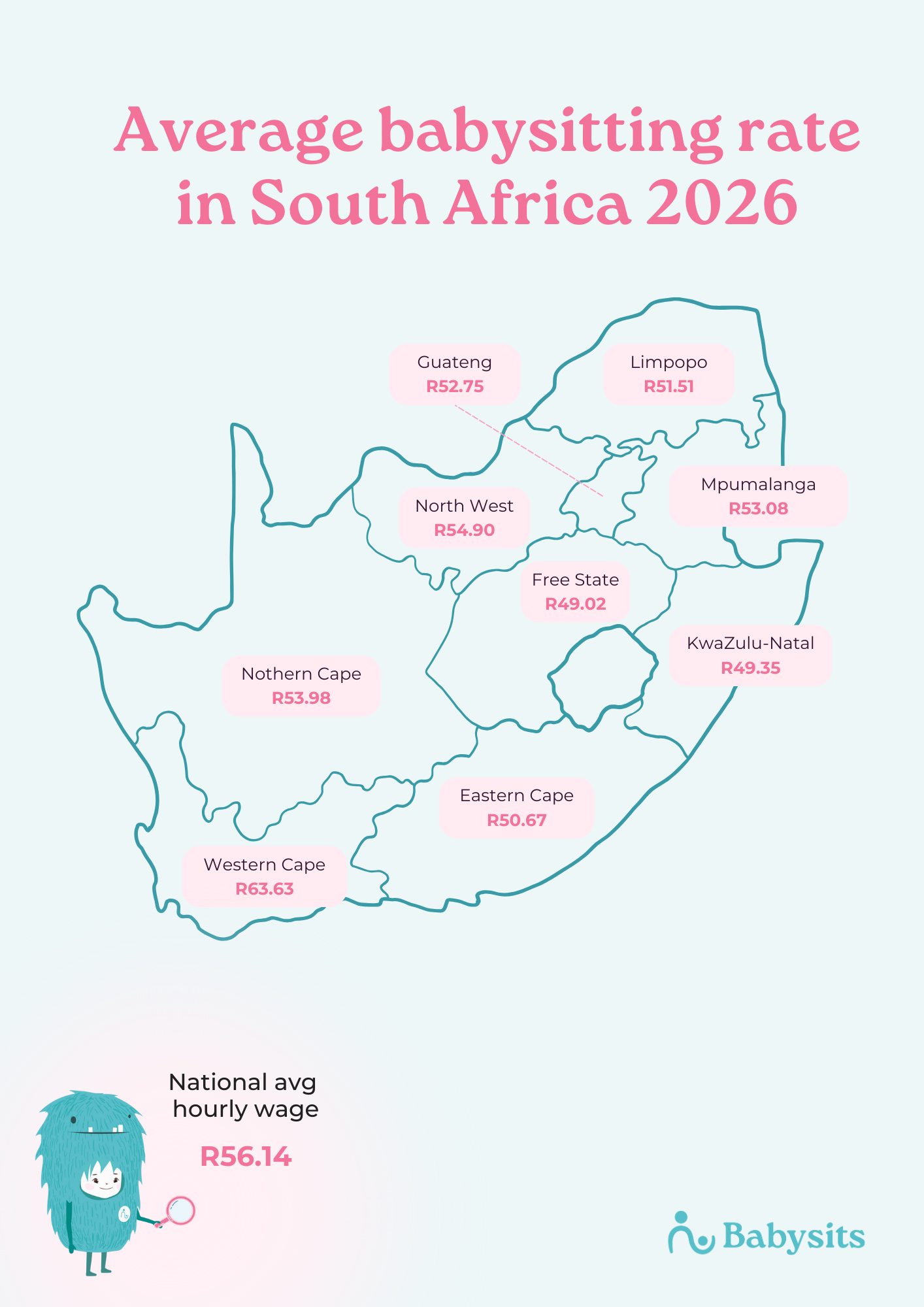
Average babysitting rates in the main cities
As mentioned above, babysitters in South Africa charge an average of R56.14 per hour. There is also a difference depending on the city. Below, we’ve listed the average babysitting rate in South Africa’s most populated cities with sufficient babysitter representation.
Babysitting rate Johannesburg R54.39
Babysitting rate Cape Town R64.17
Babysitting rate Durban R49.87
It’s important to remember that this is an average hourly rate. Several factors influence this price, including special activities such as cooking or household tasks. If more than one child is involved, the rate is also expected to be higher. The babysitter’s experience and age are also important factors in this calculation.
How much should I pay a babysitter?
As mentioned above, babysitters charge an average of R56.14 per hour. However, this amount may vary depending on the babysitter and the situation. Factors such as qualifications, experience, number of children, and additional tasks can influence the final price.
Minimum wage
The national minimum wage can be used as guidance when determining a fair rate. In 2025, the national minimum wage in South Africa was R28.79 per hour.. The 2026 minimum salary is not published yet. This is an hourly amount and should only serve as a reference, as other factors such as qualifications and experience also affect the final price. The 2026 national minimum wage has not yet been officially set.
Qualifications and experience
As a parent, you are responsible for making your own decisions and choosing whether to hire someone with more experience or someone who loves children but has less experience. Qualifications and experience are not always related to age.
In the end, it depends on the parents’ choice. You may choose to hire a less experienced babysitter and pay less per hour, or pay more for someone with several years of experience or relevant certifications such as first-aid training.
What are the duties and responsibilities of a babysitter?
In addition to ensuring that children are safe and well cared for, babysitters may also have additional tasks. Babysitters and families can agree on what these tasks are, and they can significantly influence the babysitting rate.
Household tasks
Sometimes parents ask babysitters to carry out household tasks while caring for the children, such as vacuuming, cooking, or tidying up. If the babysitter agrees, it is reasonable to expect a higher hourly rate.
Homework help
If the babysitter is good at subjects like maths or history, they may help children with homework and explain school material.
Picking up or dropping off children
Families may ask babysitters to pick up or drop off children at school or activities. Not all babysitters offer this flexibility, so this may result in a slightly higher rate.
Pet sitting
In many households, babysitters may also need to deal with pets. Pet care is an additional responsibility and may include walking a dog, cleaning a litter box, grooming, or feeding animals.
Working hours
The babysitting rate may vary depending on the time of day. Families often pay more for daytime babysitting than evening babysitting, as children may already be asleep at night. Babysitters who work late at night or stay overnight often receive a higher rate due to availability.
Multiple children
If the babysitter is caring for more than one child, this increases responsibility and workload, which can influence the rate.
Children’s ages
Younger children usually require more supervision, so babysitting rates are often higher than for older, more independent children.
The infographic below provides an overview of all the factors that contribute to determining the hourly rate.
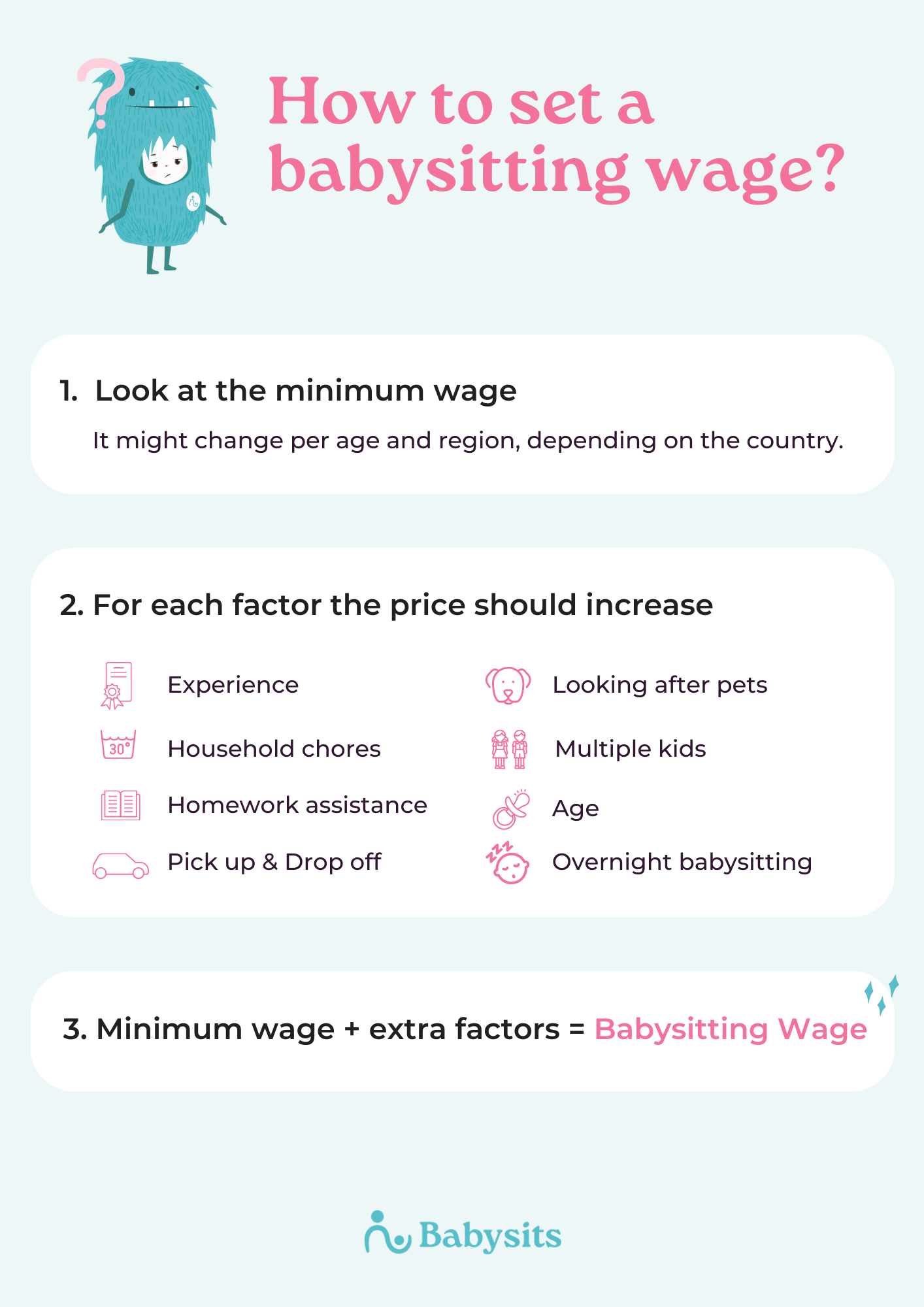
The hourly babysitting rate is something that is negotiated between parents and the babysitter. Take all the factors mentioned into account to arrive at a fair rate for both parties.
What is the average babysitting rate worldwide?
Some babysitters choose to work abroad, either temporarily during their studies, as au pairs, or as a permanent relocation. Likewise, families may look for babysitters when travelling or moving to another country.
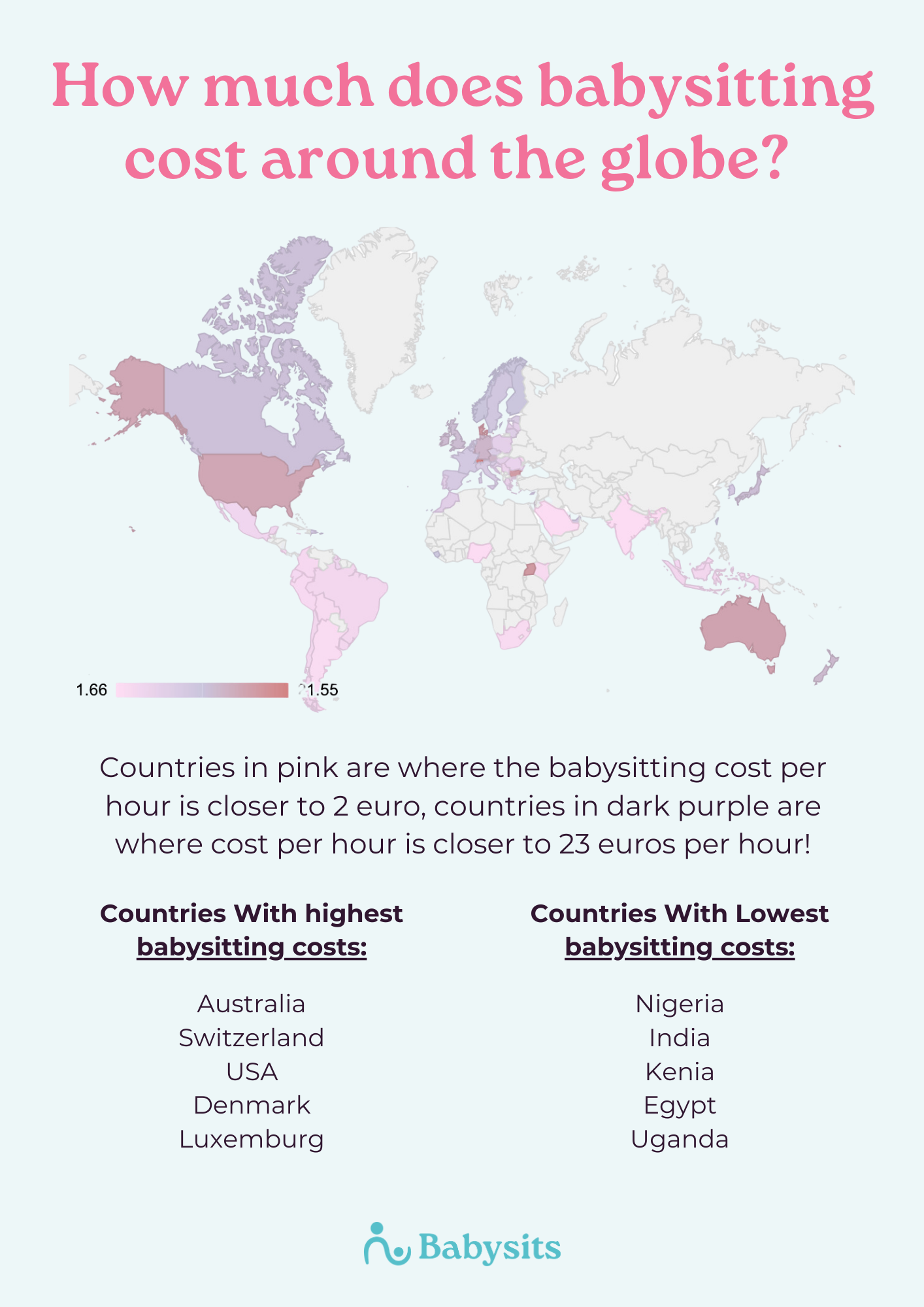
Through Babysits, it is possible to find babysitting jobs and babysitters in 120+ countries. When comparing average babysitting rates worldwide, it becomes clear that rates vary significantly by country.
Countries with the highest average babysitting rates include Australia, Switzerland, Luxembourg, Denmark, and the USA.
Now that you know how much babysitting services typically cost, you may be looking to hire a babysitter or nanny. Find babysitters in South Africa’s main cities:


